
Introduction
Developing treatments for rare diseases presents a paradox at the heart of clinical research: the patients who most urgently need new therapies are often too few in number to power the conventional randomized controlled trials (RCTs) upon which regulatory agencies have long relied. With fewer than 200,000 patients in the United States qualifying as a rare disease by FDA definition — and some ultra-rare conditions affecting only a few hundred individuals worldwide — the statistical assumptions underpinning traditional Phase II/III designs simply do not hold.
Adaptive trial designs offer a powerful solution. By allowing pre-specified modifications to trial parameters as data accumulate — without compromising the integrity or validity of the study — adaptive methods enable sponsors to extract maximum information from limited patient pools. The FDA and EMA have both issued guidance encouraging the use of adaptive designs in rare disease programs, and the number of adaptive trials in orphan indications has grown substantially over the past decade.
This article examines the key adaptive strategies available to biotech developers, the regulatory frameworks that support them, and the practical considerations that determine success in small-population settings.
The Core Challenges of Rare Disease Trials
Before exploring adaptive solutions, it is worth understanding why small patient populations create such acute difficulties for conventional trial design:
• Statistical power constraints. Traditional superiority trials require large samples to detect clinically meaningful effect sizes at acceptable Type I and Type II error rates. For diseases with global patient populations in the hundreds or low thousands, achieving 80–90% power at conventional significance thresholds may be mathematically impossible.
• Patient heterogeneity. Many rare diseases — particularly those with a genetic basis — exhibit considerable phenotypic variability even among patients sharing the same molecular diagnosis, complicating endpoint selection and cohort comparability.
• Recruitment competition. In small disease communities, multiple companies are often recruiting simultaneously, meaning that a single sponsor may need to engage a substantial proportion of all eligible patients globally to complete enrollment.
• Lack of validated endpoints. For many rare diseases, particularly those with no existing approved therapies, there are no established, validated clinical endpoints or natural history data against which to measure treatment effect.
• Pediatric complexity. A significant proportion of rare diseases are pediatric in onset, adding ethical, logistical, and regulatory layers to an already complex development picture.
Key Adaptive Design Strategies
Adaptive designs are not a single methodology but a family of approaches, each suited to different clinical and statistical challenges. Below are the most relevant strategies for rare disease programs.
1. Seamless Phase II/III (Adaptive Seamless) Designs
Conventional drug development treats Phase II (dose-finding, proof of concept) and Phase III (confirmatory) as distinct, sequential stages separated by a formal decision point. Seamless adaptive designs combine both phases into a single, continuous study, with patients enrolled in Stage 1 contributing to the final analysis.
This approach offers two major advantages in small populations: it eliminates the gap between phases, accelerating timelines by 12–18 months in some programs; and it allows all enrolled patients — including those in the learning phase — to contribute to the confirmatory dataset, maximizing the use of each enrolled patient.
The key regulatory requirement is that the adaptation rules (e.g., dose selection criteria, sample size recalculation triggers) are fully pre-specified in the protocol and statistical analysis plan. Blinded interim analyses conducted by an independent Data Monitoring Committee (DMC) protect the trial’s Type I error rate.
2. Sample Size Re-estimation
When designing a rare disease trial, sponsors often have limited data on which to base power assumptions. A sample size that looks reasonable at protocol design may prove either insufficient or unnecessarily large once the trial is underway.
Blinded sample size re-estimation (BSSR) allows the sponsor to review the pooled (blinded) variance of the primary endpoint at an interim point and adjust the final sample size accordingly — without unblinding treatment allocation or introducing operational bias. This preserves the integrity of the trial while protecting against underpowering due to optimistic variance assumptions.
In rare disease contexts, BSSR is especially valuable when natural history data are sparse and variance estimates are derived from small observational studies or registries. The FDA’s 2019 guidance on adaptive designs explicitly endorses BSSR as a well-understood and generally acceptable adaptation.
3. Response-Adaptive Randomization
In traditional RCTs, the allocation ratio between treatment and control arms is fixed throughout the trial. Response-adaptive randomization (RAR) dynamically adjusts the probability of assignment to each arm based on accumulating efficacy data, increasing allocation to the arm that appears more favorable.
In rare disease settings, RAR offers an ethical and practical advantage: it reduces the expected number of patients assigned to an inferior treatment. This is particularly meaningful when the patient population is small and each participant’s contribution is precious. However, RAR introduces operational complexity — including logistical challenges in real-time data collection and the risk of allocation imbalance under certain conditions — and is most appropriate when fast-responding biomarker endpoints are available.
4. Bayesian Adaptive Designs
Bayesian frameworks are particularly well-suited to rare disease development because they formally incorporate prior knowledge — from natural history studies, registry data, or earlier phase trials — into the analysis through a prior probability distribution. As trial data accumulate, the prior is updated into a posterior distribution, providing a continuously refined estimate of treatment effect.
Key applications include:
• Bayesian borrowing. Historical data from prior studies (including natural history cohorts or external controls) are formally incorporated into the analysis, effectively augmenting the current trial’s sample size. Hierarchical models and power prior approaches allow the degree of borrowing to be calibrated to the degree of comparability between historical and current data.
• Predictive probability stopping rules. The trial can be stopped early for efficacy or futility based on the predictive probability that the trial will demonstrate a positive result if continued to its maximum sample size — a more intuitive criterion than frequentist p-values for small populations.
• Dose-finding via Bayesian optimal interval (BOIN) designs. In early-phase rare disease oncology programs, BOIN and related Bayesian model-assisted designs efficiently identify the optimal biological dose from small cohorts.
5. Master Protocol and Platform Designs
In ultra-rare disease spaces where no single sponsor can enroll a conventionally powered trial alone, master protocols offer a collaborative infrastructure. Under a single overarching protocol, multiple sponsors can evaluate different interventions in the same patient population — sharing a common control arm and standardized endpoints.
The FDA’s Complex Innovative Trial Design (CID) meeting program was specifically designed to facilitate pre-submission dialogue on master protocol proposals, and several rare disease platform trials — particularly in pediatric oncology and rare neurodegenerative diseases — have demonstrated the feasibility of the approach.
Regulatory Landscape: FDA and EMA Guidance
Regulatory agencies have progressively updated their frameworks to accommodate adaptive approaches in rare disease programs:
• FDA Guidance on Adaptive Design Clinical Trials (2019). This landmark guidance distinguishes between “well-understood” adaptations (which the FDA views as posing few regulatory challenges) and “less well-understood” adaptations that require earlier and more detailed regulatory engagement. Sponsors pursuing the latter are strongly encouraged to seek a Type B meeting early in development.
• FDA Rare Diseases Common Issues in Drug Development (2019). Offers specific guidance on natural history studies, use of external controls, and statistical considerations in small patient populations, including the acceptability of Bayesian frameworks.
• EMA Guideline on Small Population Groups (2006, updated reflection papers). Acknowledges that for orphan conditions, the standards of evidence — including reliance on single-arm studies with historical controls, surrogate endpoints, and Bayesian methods — may differ from those applied to common diseases, provided the uncertainty is clearly quantified and communicated.
• Complex Innovative Trial Design (CID) Meeting Program. The FDA’s CID program provides a dedicated pathway for sponsors to obtain preliminary feedback on novel adaptive designs before the formal IND/NDA process. Early engagement through CID meetings has proven valuable in aligning agency and sponsor expectations on pre-specified adaptation rules and operating characteristics.
Practical Considerations for Implementation
Designing an adaptive trial is more complex than a conventional study. Sponsors should anticipate the following practical demands:
Extensive Pre-Trial Simulation
Adaptive designs must be evaluated through extensive clinical trial simulation before the protocol is finalized. Simulations should model a broad range of scenarios — including null, alternative, and pessimistic assumptions about effect size and variance — to characterize the trial’s operating characteristics: Type I error, power, expected sample size, and probability of early stopping. This work requires dedicated biostatistical expertise and is typically completed six to twelve months before first patient enrollment.
Robust Operational Infrastructure
Adaptive trials impose higher demands on interactive web response systems (IWRS), data management, and real-time data quality than conventional studies. Interim analyses must be conducted on clean, current data, and the logistics of blinded data transfer to the independent DMC — without compromising the blind for the sponsor — must be carefully engineered. Sponsors should engage their clinical operations and data management teams early in the design process to ensure infrastructure can support the adaptation schedule.
Independent Data Monitoring Committee (DMC)
An independent DMC with expertise in both the therapeutic area and adaptive methodology is essential. The DMC charter must specify the decision rules for each potential adaptation — including stopping boundaries, sample size re-estimation triggers, and arm selection criteria — in sufficient detail to be implemented objectively. Critically, the DMC must be able to make adaptation decisions without conveying unblinded information to the sponsor.
Endpoint Selection and Natural History Data
Adaptive designs do not solve the fundamental challenge of endpoint selection in rare diseases — they amplify the importance of getting it right. Sponsors who invest in natural history studies and patient registry development early in their programs gain two critical advantages: the variance estimates needed to power adaptive designs, and the historical control data that enable Bayesian borrowing. Companies that skip this foundational work often find themselves designing adaptive trials around poorly characterized endpoints, limiting the credibility of their results with regulators.
Case Example: Adaptive Design in Practice
To illustrate how these principles apply in practice, consider a hypothetical program in a lysosomal storage disorder affecting approximately 1,500 patients globally. A conventional Phase III trial requiring 150 patients per arm — a common threshold for regulatory adequacy — would require enrolling 20% of the entire global population, a logistically and competitively implausible target.
An adaptive approach might instead:
• Design a seamless Phase II/III study with an initial cohort of 40 patients to confirm proof of concept and refine variance estimates.
• Conduct a blinded sample size re-estimation at 50% information time, adjusting the total enrollment target based on observed endpoint variability.
• Apply Bayesian borrowing from a previously established natural history registry to augment the control arm, reducing the number of patients randomized to placebo.
• Include a pre-specified futility boundary to enable early stopping if the interim data do not support a clinically meaningful effect.
Under this design, the sponsor might achieve adequate statistical evidence with 80–90 total patients — a 40–45% reduction compared to a conventional approach — while maintaining Type I error control and regulatory acceptability.
Strategic Implications for Biotech Companies
Adaptive trial design is not simply a statistical tool — it is a strategic asset. Companies that master adaptive methodology gain competitive advantages that compound across their pipeline:
• Faster decision-making. Interim adaptation rules create formal decision points that replace ad hoc sponsor judgment, reducing the risk of proceeding with ineffective compounds and accelerating portfolio rationalization.
• Capital efficiency. By reducing total enrollment requirements and enabling early futility stopping, adaptive designs can meaningfully reduce the cost of a Phase II/III program — a significant advantage for emerging biotech companies operating under capital constraints.
• Regulatory credibility. Sponsors with a track record of well-executed adaptive programs — supported by early regulatory engagement and transparent operating characteristics — build credibility with FDA and EMA reviewers, smoothing the path for subsequent submissions.
• Patient community engagement. Demonstrating a commitment to efficient, ethically designed trials — minimizing placebo exposure in populations with no other treatment options — resonates deeply with rare disease patient advocacy communities, which are influential stakeholders in regulatory and payer decisions.
Conclusion
Adaptive trial designs represent the most powerful toolkit available to biotech companies developing treatments for rare diseases. By enabling efficient learning from small patient populations, incorporating prior knowledge through Bayesian frameworks, and aligning clinical and regulatory milestones, adaptive approaches make it possible to generate compelling evidence in settings where conventional methods fall short.
-
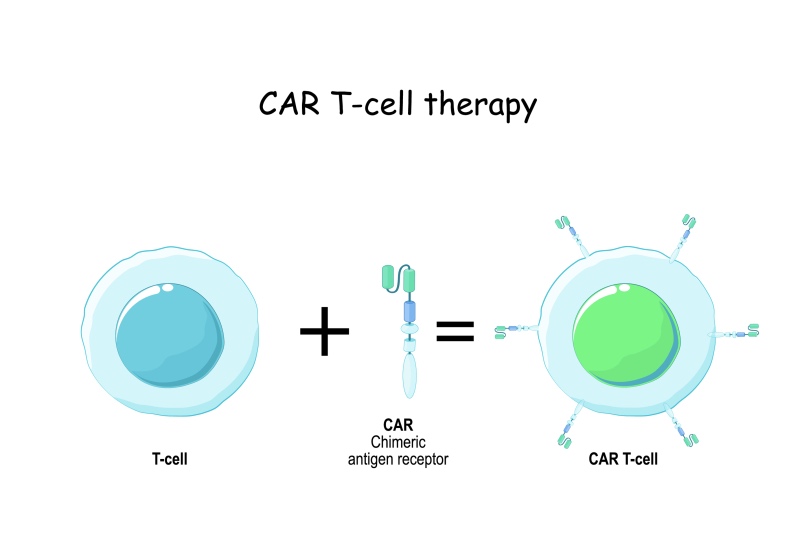 Statistical Analysis of Global CAR T Cell Therapy Deals between 2016 and May 2021
-
 Global Clinical Progress for Innovative Oncology Drugs Under the Spotlights in May 2021
-
 Chinese Government's Policies Promote Successful Licensing Transactions
-
 Going Global Early: Why Multi-Regional Clinical Trials Drive Higher Biotech Valuation