
A rapidly maturing market, new legislative tailwinds, and a wave of next-generation modalities are reshaping what it means to compete — and win — in rare disease therapeutics.
Executive Summary
• The global orphan drug market is valued at approximately $243 billion in 2026 and is on track to exceed $330 billion by 2031, growing at a CAGR of ~6–9% depending on methodology.
• Oncology accounts for ~36% of the market; neurology is the fastest-growing therapeutic segment.
• Biologics — including monoclonal antibodies, cell therapies, and gene therapies — now represent over 55% of orphan drug revenues.
• Legislative developments in early 2026, including IRA amendments and reauthorization of the Rare Pediatric Disease Priority Review Voucher program, have meaningfully stabilized the US incentive landscape.
• China-based sponsors now hold 15% of FDA orphan drug designations, introducing new competitive dynamics and pricing pressure.
• More than 95% of rare diseases still lack an approved treatment, pointing to a vast, largely untapped opportunity.Introduction: A Market Built on Unmet Need
Few sectors in biopharmaceuticals have experienced the sustained growth, strategic appeal, and humanitarian urgency of orphan drugs. Defined in the United States as therapies targeting conditions affecting fewer than 200,000 people, and in Europe as diseases with a prevalence below five in 10,000, orphan drugs have evolved from a policy experiment into one of the most commercially dynamic segments in global healthcare.
The numbers underscore both the opportunity and the obligation. The FDA estimates that more than 7,000 rare diseases have been identified, affecting roughly 30 million Americans and approximately 350 million people worldwide. Despite the passage of the US Orphan Drug Act over four decades ago, more than 95% of these conditions still lack an approved treatment — a sobering statistic that simultaneously represents one of the largest unmet medical needs in medicine and one of the most compelling long-term growth opportunities in biopharmaceuticals.
In 2026, several forces are converging to redefine the competitive landscape: a maturing but still-expanding regulatory incentive framework, the emergence of transformative modalities such as gene editing and RNA-based therapies, evolving pricing and reimbursement pressures from the Inflation Reduction Act, and the rising competitive weight of China-based developers. This article examines each of these dynamics and draws out the strategic implications for biotech companies navigating this market.
Market Size and Growth Trajectory
The global orphan drug market reached an estimated $217–$243 billion in 2026, depending on which analyst methodology is applied. Across multiple market research sources, consensus points to a CAGR in the range of 6–12% through the early 2030s. Evaluate Pharma's 2026 Orphan Drug Report projects that drugs for rare diseases will generate over $400 billion of the approximately $1.9 trillion in projected global prescription drug sales by 2032 — a figure that would represent more than 21% of the entire prescription market, up from 15% in 2022.
To put this scale in historical context: the rare disease market of 2032 is expected to be roughly equivalent in size to the entire global prescription drug market just two decades ago. This trajectory reflects not just volume growth from new approvals, but sustained pricing power for truly differentiated therapies in indications where patients have few or no alternatives.
Therapeutic Area Breakdown
Oncology remains the dominant segment, accounting for approximately 36% of market value in 2025–2026. Rare and ultra-rare cancers — including specific subtypes of leukemia, sarcoma, and lymphoma — have attracted disproportionate R&D investment, driven by orphan drug incentives, the availability of validated endpoints, and the willingness of oncology-focused payers to reimburse at premium price points. Keytruda (pembrolizumab) exemplifies oncology’s dominance, holding approximately 15.7% of orphan drug market share by revenue.
Neurology is the fastest-growing therapeutic segment, driven by deeper understanding of the genetic and molecular underpinnings of rare neurological conditions, expanding investment, and a pipeline of RNA-based and gene therapy candidates targeting conditions such as spinal muscular atrophy, rare epilepsies, and Huntington’s disease. Hematology, metabolic and genetic disorders, and immunology round out the major segments, each with active pipelines and distinct competitive dynamics.
Biologics Lead; Gene Therapies Accelerate
Biologics — including monoclonal antibodies, enzyme replacement therapies, and fusion proteins — represent approximately 55% of orphan drug revenues, reflecting the inherent advantages of large-molecule approaches in diseases with well-defined molecular targets. However, cell and gene therapy is the modality with the highest growth trajectory, expanding at a CAGR of approximately 19% through 2035.
More than 1,300 gene therapies are currently in development globally, with over 370 in clinical-stage trials. In Q1 2026 alone, two new approvals were granted across the gene, cell, and RNA therapy categories. Notable recent milestones include Rocket Pharmaceuticals’ March 2026 FDA approval of RP-A501 for Danon disease and Ultragenyx’s BLA submission for DTX401 in Glycogen Storage Disease Type Ia. These approvals signal the continued maturation of gene therapy from experimental modality to viable commercial category.
Regulatory and Policy Landscape: 2026 Developments
Inflation Reduction Act: A Stabilizing Amendment
The Inflation Reduction Act (IRA) of 2022 introduced Medicare drug price negotiations beginning in 2026, creating an initial wave of concern across the rare disease community. As originally enacted, the IRA’s orphan drug exemption applied only to products with a single approved indication — a narrow carve-out that threatened to chill R&D investment in drugs with multiple orphan applications, since pursuing a second indication would strip the product of its price negotiation protection.
A meaningful legislative correction arrived in 2025, when amendments to the IRA expanded the orphan exemption to cover drugs with multiple rare disease indications, provided all approved indications qualify as rare diseases. The Sidley analysis of this amendment notes that it also clarified the eligibility period for products that lose orphan drug exclusivity, adding further commercial predictability. Separately, the Consolidated Appropriations Act of February 2026 codified the FDA’s narrower interpretation of orphan exclusivity — confirming it applies to the specific approved indication within a rare disease, not to the drug across all uses — resolving a legal ambiguity that had persisted since a 2021 appellate court ruling.
Together, these legislative developments have meaningfully stabilized the US commercial calculus for multi-indication orphan programs. Sponsors who had been deferring second-indication clinical development to protect their IRA exemption status are now reassessing those decisions.
Rare Pediatric Disease Priority Review Voucher: Reauthorized
The Rare Pediatric Disease Priority Review Voucher (PRV) program — which awards sponsors a transferable voucher granting accelerated FDA review upon approval of a therapy for a qualifying rare pediatric condition — was reauthorized in early 2026 through September 2029. Given that these vouchers have historically sold for more than $100 million, reauthorization restores a significant financial incentive for developers weighing investment in childhood-onset rare diseases. For smaller biotech companies in particular, the PRV can represent a meaningful non-dilutive capital event that partially offsets the cost of development.
Asia-Pacific: Rising Policy Support and New Competition
Regulatory frameworks in Asia-Pacific are evolving rapidly. Japan’s SAKIGAKE designation, China’s two-tier orphan policy (offering five-year exclusivity for domestic products and three years for imports), and India’s proposed National Fund for Rare Diseases are each driving local investment in rare disease programs. At the company level, the share of FDA orphan designations assigned to China-based sponsors rose from less than 5% in 2020 to 15% in 2025 — a trend that is beginning to introduce new competitive dynamics in Western markets, particularly as China-licensed molecules advance toward US and EU submissions.
Competitive Landscape: Who Is Winning — and How
Concentration at the Top
Orphan drug revenues remain highly concentrated among a relatively small group of global pharmaceutical companies. J&J, Novartis, Roche, AbbVie, Sanofi, Takeda, AstraZeneca, Pfizer, and BMS together account for the majority of approved orphan drug revenue. J&J’s Darzalex (daratumumab), approved for multiple myeloma, is forecast to be the top-selling orphan drug by 2032, with Evaluate projecting nearly $22 billion in projected worldwide sales — a position reinforced by a subcutaneous formulation that effectively doubles the franchise’s commercial lifespan.
However, the competitive order is shifting. A new cohort of mid-sized rare disease specialists — including Vertex Pharmaceuticals, BioMarin, Ultragenyx, Alnylam, Sarepta, Blueprint Medicines, argenx, and Ionis — has built durable franchises in specific therapeutic areas and increasingly competes with larger players for both patients and pipeline assets. Their focused expertise in disease biology, patient community relationships, and regulatory navigation represents a genuine competitive advantage in indications where deep specialization matters more than scale.
Modality as Competitive Differentiation
Increasingly, the competitive landscape is being shaped not just by which disease a company targets, but by the modality it deploys. RNA-based therapies (antisense oligonucleotides, siRNA, mRNA) have emerged as a powerful complement to traditional small molecules and biologics, offering highly specific target engagement with differentiated safety profiles. Alnylam’s siRNA franchise in transthyretin amyloidosis exemplifies the commercial potential of RNA in rare disease: its decision to delay further indication expansion for Amvuttra — citing IRA concerns under the original single-indication exemption — also illustrated, until recently, how policy risk can shape pipeline strategy.
Gene therapy represents perhaps the most disruptive modality in the long term, offering the possibility of functional cures with a single administration. However, commercial realization has been slower than early enthusiasm suggested, owing to manufacturing complexity, durability uncertainty, and payer resistance to high one-time costs. The field is now developing more sophisticated commercial and reimbursement models — including outcomes-based contracts and annuity payment structures — to address these barriers.
The China Factor
China’s emergence as a significant holder of FDA orphan drug designations is a structural shift that industry observers are only beginning to fully process. Chinese sponsors securing US designations for molecules originally developed for domestic indications are creating a new competitive vector: the potential for lower-cost, China-licensed alternatives to enter Western markets once those molecules complete US clinical programs. The BioPharma Dive analysis of the 2026 Orphan Drug Report notes that this dynamic could add further pricing pressure on branded orphan products, particularly in less-complex small-molecule categories. Companies with biologics or gene therapy platforms are better insulated from this risk, given the manufacturing complexity and intellectual property depth of these modalities.
Growth Opportunities: Where the Frontier Lies
The 95% Opportunity
The single most important growth driver in the orphan drug market is also the most straightforward: more than 95% of identified rare diseases have no approved treatment. Even with thousands of ongoing clinical programs, the addressable opportunity dwarfs current market penetration. Advances in next-generation sequencing and AI-assisted diagnostics are accelerating rare disease identification, expanding the denominator of diagnosable patients and simultaneously creating new development targets.
Neurology and CNS: The Next Frontier
While oncology currently leads the market by revenue, neurology and CNS disorders are positioned to become the dominant growth segment over the next decade. Rare neurological conditions — including lysosomal storage disorders with neurological involvement, rare epilepsy syndromes, and neurodegenerative conditions with genetic etiology — represent a vast unmet need with historically limited treatment options. Improved molecular characterization, AAV gene therapy vectors with CNS tropism, and better clinical trial endpoints (including digital biomarkers) are converging to make this category increasingly tractable.
Emerging Markets: A Nascent but Growing Opportunity
Asia-Pacific is forecast to be the fastest-growing regional market for orphan drugs through 2030, with a projected CAGR of approximately 11.6%. Rising healthcare spending, improving diagnostic infrastructure, expanding rare disease registries, and evolving regulatory frameworks in China, Japan, South Korea, and India are all contributing to this trajectory. Sponsors with global ambitions should develop Asia-Pacific regulatory and commercial strategies earlier in their programs than historical practice might suggest.
AI and Genomics: Compressing the Discovery Cycle
Artificial intelligence is beginning to materially compress the timelines and costs of rare disease drug discovery. AI-enabled target identification, virtual screening, and predictive biomarker development are reducing the time from genetic insight to development candidate. In parallel, the proliferation of rare disease patient registries and biobanks — increasingly linked through international data-sharing initiatives — is providing the training data these models need to generate actionable biological hypotheses. Companies that invest early in AI-enabled discovery infrastructure are building capabilities that will compound in value as the technology matures.
Strategic Implications for Biotech Companies
The orphan drug market of 2026 is not the same market it was a decade ago. The entry barriers have risen: regulatory agencies expect more rigorous trial designs, payers are increasingly sophisticated about real-world evidence, and competition for patient populations is more intense as the number of active programs has grown. Companies that win in this environment share several characteristics:
• Deep disease biology expertise. Rare disease development favors sponsors who invest heavily in understanding the natural history, molecular heterogeneity, and biomarker landscape of their target condition. This expertise creates advantages in trial design, endpoint selection, and regulatory dialogue that generalists cannot easily replicate.
• Early and sustained regulatory engagement. Given the complexity of adaptive designs, novel endpoints, and advanced modalities, sponsors who engage FDA and EMA early — through pre-IND meetings, CID consultations for adaptive designs, and PRIME designations in Europe — systematically outperform those who treat regulatory strategy as a late-stage activity.
• Patient community relationships. In rare disease, patient advocacy organizations are not peripheral stakeholders — they are strategic partners who influence regulatory decisions, shape payer perspectives, drive trial recruitment, and provide the natural history data that underpins clinical development. Companies that invest in these relationships early build goodwill and intelligence that competitors cannot quickly replicate.
• Commercial model innovation. As orphan drug prices face increasing scrutiny from payers — particularly for gene therapies with million-dollar price tags — sponsors must develop innovative reimbursement approaches, including outcomes-based agreements, installment payment models, and value-based pricing frameworks. Companies that wait until launch to develop these strategies are typically too late.
• Portfolio and modality diversification. The companies best positioned for long-term orphan drug success are building capabilities across multiple modalities — not betting exclusively on small molecules, biologics, or gene therapy, but developing the organizational capacity to deploy the right tool for each target indication.
Conclusion
The orphan drug market in 2026 stands at an inflection point. The structural foundations of growth — vast unmet need, robust regulatory incentives, sophisticated capital markets willing to fund rare disease innovation, and an increasingly productive toolkit of therapeutic modalities — remain firmly in place. Legislative developments over the past 18 months have materially reduced the policy uncertainty that briefly threatened to chill US investment in multi-indication orphan programs.
At the same time, the market is maturing. Competition for patients, assets, and scientific talent is more intense. Payers are more demanding. New entrants from Asia are beginning to challenge the competitive assumptions of established Western sponsors. And the bar for regulatory approval — particularly in cell and gene therapy — is rising as agencies gain experience with these modalities and refine their evidentiary expectations.
The companies that will capture the most value from this market over the next decade are those that combine scientific rigor with regulatory sophistication, patient community investment with commercial model innovation, and a long-term perspective on disease areas that may take years to yield returns. The rare disease opportunity has never been larger. The skills required to realize it have never been more demanding.-
 Global Resources. Local Speed. Clinical Progress Without the Burn.
-
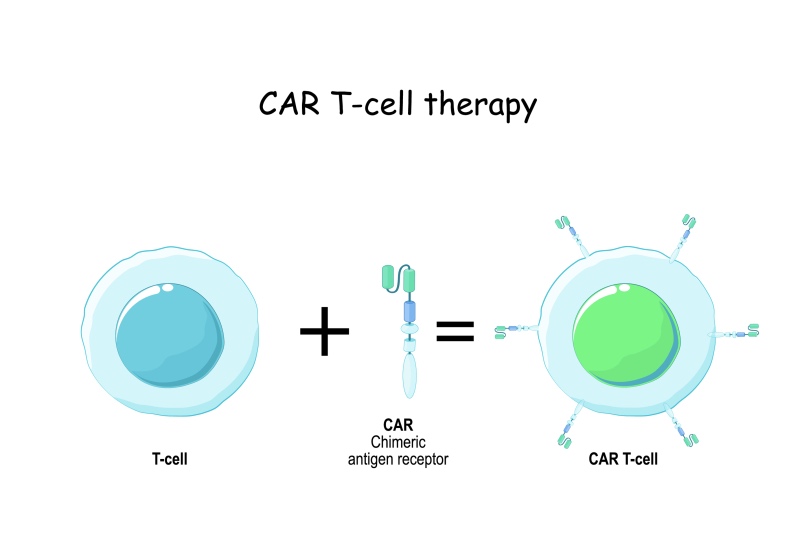 Statistical Analysis of Global CAR T Cell Therapy Deals between 2016 and May 2021
-
 Global Clinical Progress for Innovative Oncology Drugs Under the Spotlights in May 2021
-
 Chinese Government's Policies Promote Successful Licensing Transactions